Coral Ridge Country Club Closed Its Membership Rolls. The Neighborhood Kept Building Anyway.
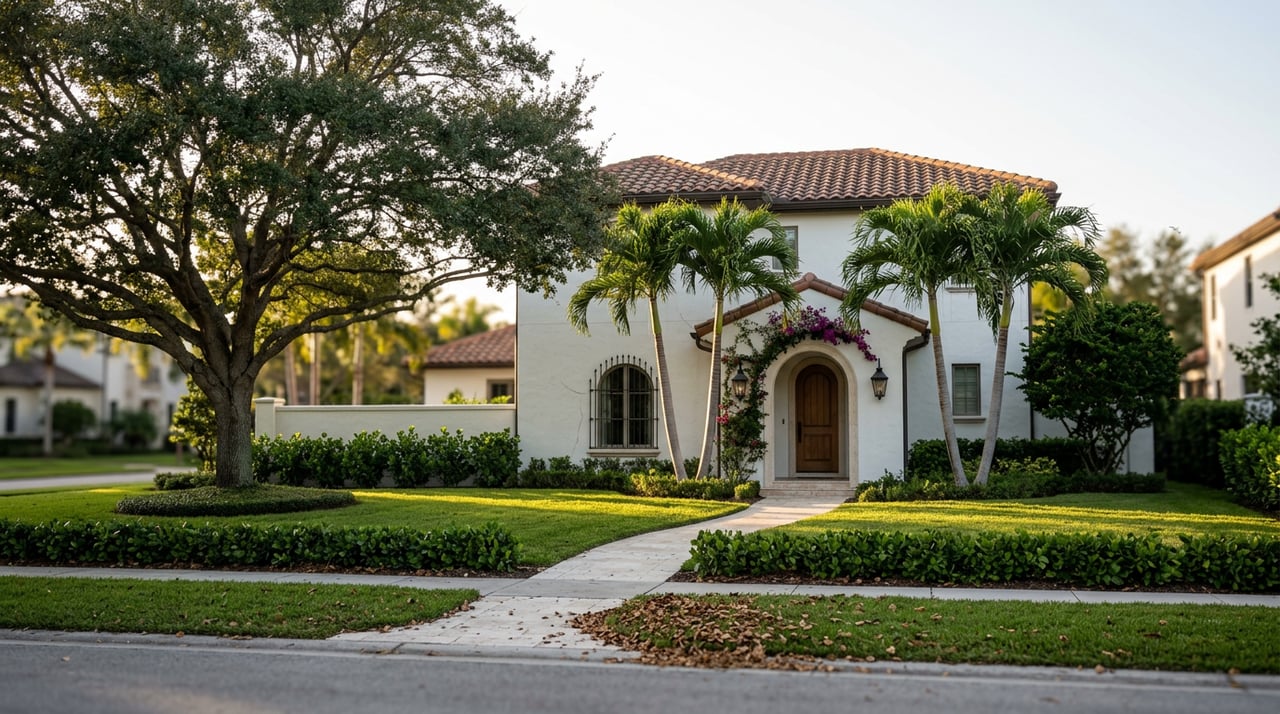
Drive past 3801 Bayview Drive this month and the pro shop is doing what it always does in September: restocking golf balls, printing new scorecards, getting ready for the cooler rounds that Broward's fall makes possible. What is different is the sign on the membership page. Coral Ridge Country Club lists every category as closed. Not waitlisted with a number attached. Closed, full stop, with a note that demand has stayed high enough that current members are holding onto what they have.
For a neighborhood that has spent seven decades organizing itself around one 18-hole course, that is worth sitting with for a moment. But the more interesting fact isn't the closed door. It's what has grown up around it while the door stayed shut.
The reason people don't give up their membership here isn't mysterious. Coral Ridge Country Club opened in 1954, designed by Robert Trent Jones Sr., one of the two or three names that defined mid-century American golf architecture. His son Rees Jones, known in the industry as the Open Doctor for his work restoring U.S. Open venues, came back in 2020 and restored the course, keeping his father's runway-style tee boxes while sharpening the greens. Rees Jones also added a 9-hole par-3 course in 2015, giving the club a second, shorter loop for members who want an hour of golf instead of four.
The elder Jones used to describe his own design as an easy bogey but a hard par, a phrase the club still uses to describe the layout today. That's not marketing language so much as an accurate account of what the course asks of the golfers who play it week after week: forgiving enough to keep a mid-handicap round moving, precise enough in its bunkering that a good score still has to be earned.
None of that is new information to anyone who has played there. What it explains is why the membership rolls don't turn over. A course with that kind of design pedigree, maintained continuously since a name-brand restoration six years ago, isn't the kind of amenity people trade in when life gets busy. The waiting isn't a marketing tactic. It's the plain math of a private, non-equity club with a fixed number of tee times and a membership that isn't leaving.
Coral Ridge is a private club, which means the closed membership isn't a headline anyone put out to build buzz. It's a practical fact the club posts on its own site so people don't waste time inquiring. The current staff, led by general manager J.J. Sehlke and director of golf Scott Fox, are running a club at capacity: eleven clay tennis courts, a junior Olympic pool, a 22,000-square-foot clubhouse, and a golf operation with five PGA professionals on staff, all of it booked out by a membership that already has what it needs.
If you live in the streets around the club, that closure changes very little about your actual week. You were never going to walk onto the course without a member's invitation regardless of whether the rolls were open or closed. What the closure does confirm is something residents already sensed: the club isn't trying to grow. It's maintaining a fixed, well-tended core while everything else around it moves.
That's the part worth paying attention to. A private club with a permanently short membership list could, in theory, leave a neighborhood feeling like it revolves entirely around an address most people will never enter. Coral Ridge hasn't turned out that way, because the streets around the club have built a second social layer that has nothing to do with a membership card.
Within a few minutes of the clubhouse, the current rotation includes:
None of these places depend on Coral Ridge Country Club for foot traffic, and none of them ask whether you play golf. They exist because the neighborhood around the club has enough density and enough disposable income to support a real dining scene on its own terms. The club anchors the address. The restaurants around it built the rest of the neighborhood's daily rhythm independently.
The clearest evidence that this second layer is still growing, not just holding steady, arrived this September. Peppi's Pizza is opening its first Broward County location on Sunrise Boulevard, a short drive from both Victoria Park and Coral Ridge. It's a New York-style slice shop with enough of a following elsewhere that its arrival got picked up in local restaurant coverage before the doors even opened.
A pizza counter opening a few minutes from a private club that hasn't taken a new member in some time might sound like an odd detail to pair together, but it's the most honest way to read what's actually happening in this neighborhood. The club is a fixed point, built once by Robert Trent Jones Sr. and refined once more by his son, serving a membership that has no reason to turn over. The blocks around it are not fixed. They're still absorbing new restaurants, still drawing operators who see enough rooftops and enough regular foot traffic to bet on a new address.
That's the split worth understanding if you already live here. The club's story is one of continuity: same design lineage since 1954, same demand pressure keeping the rolls closed, same eleven tennis courts and same par-72 course that members aren't giving up. The neighborhood's story, one street over, is one of steady, incremental addition: a new pizza shop this month, a trattoria with its own weekly rhythm, a scorecard of casual rooms near the mall that has nothing to do with anyone's handicap.
It would be easy to describe Coral Ridge as a golf neighborhood and stop there, the way a lot of guides to the area do. The club is genuinely central to how the neighborhood is known, and the design history backs that up. But a closed membership list doesn't freeze a neighborhood in place. It just means the club itself has stopped changing while the streets around it keep adding names to the map. If you live here, that's the useful thing to know this fall: the course isn't opening its gates any wider, and it doesn't need to, because the neighborhood outside them was never waiting on an invitation.
If you're weighing what any of this means for your own address in Coral Ridge, whether that's the value the club's history adds to the block or how the surrounding dining scene factors into how buyers see the area, the team at Tagliamonte & Associates has spent years reading these details on the ground here. Reach out anytime you want a second opinion grounded in what's actually happening on these streets, not just what the portals say about them.
Stay up to date on the latest real estate trends.


A top South Florida producer since 2000 and recognized as in the top ½% of real estate producers nationally, Sandra Tagliamonte and Tagliamonte and Associates take pride in their ability to assist clients in the most effective and successful ways.